

Project Description
Continuous improvement is usually presented as an engineering or logistics concern, but it’s an important principle when adopted in marketing or communication roles as well. Defining the expected impact of a piece of communication, measuring its real impact, and designing small, reversible experiments (or A/B tests) is a simple path to a high quality content machine.
Outcome
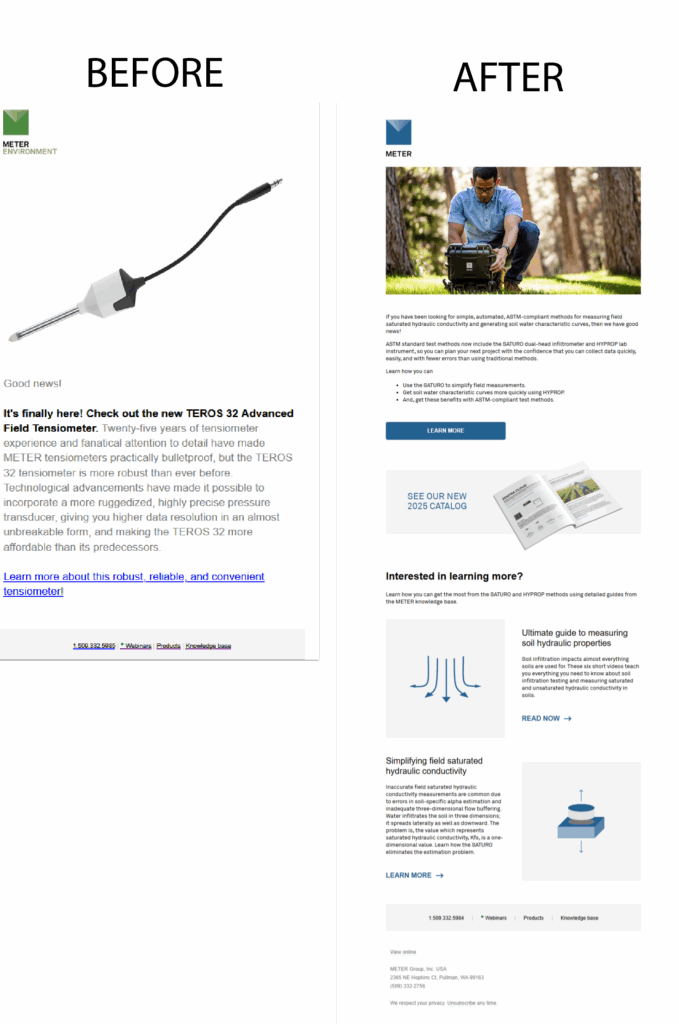
In my first year at METER, I focused on improving our marketing email program content through technical updates, graphic design, and updating the email content strategy to match seasonal audience interest in multiple markets.
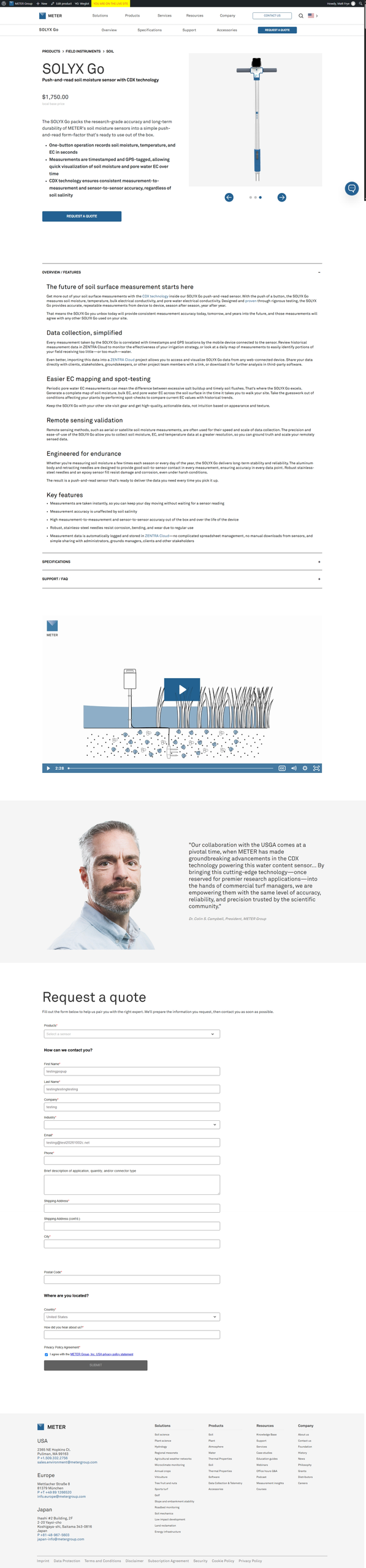
Since then, I have applied the same approach to making small, regular improvements with our graphic design and web teams, leading technical improvements for accessibility and maintainability and content improvements to keep content focused on current audiences and solution sets.
Audience
These updates impacted all market groups, customers, leads, and contacts. My CI process is carefully planned to ensure that all changes yield net-positive impacts. If any change adversely impacts a definable audience group, it is reverted until some other avenue can be created for that specific audience.
For instance, when email content changes were negatively impacting geotechnical engineers, we paused those changes until we could create alternatives in the email cycle that kept them engaged without overcorrecting and losing the interest of agricultural audiences.
Goal
In both the email and web content improvement programs, goals were split between improving tracking (so the data could be used for more improvements) and improving audience engagement over multiple contact points.
Process
I focus on the technical foundation first to ensure content is being delivered consistently in the form it is intended, as it’s hard to measure the impact of messaging when the interface itself gets in the way.
Once the technical foundation is working as intended, I measure engagement with whatever tools I have available — custom redirects in Salesforce/Pardot assets released to particular audiences, GA4 data associated with audience-specific UTM parameters, browsing behavior of audience segments, and form completions with additional customer data.
When enough reliable data has been gathered, I begin making small adjustments to CTAs, content structure, and framing elements of existing content to drive changes to KPIs relevant to that piece of content.
Key takeaways
Email HTML and layout
- Reduced bugs and link errors to nearly zero.
- Reduced email creation time by 75%, to less than an hour.
- Reduced content planning time to half a day per month, rather than half a day per week.
Approval Cycle
- Rigid, unchanging elements did not need to be re-reviewed for each piece of content.
- Pardot email template with pre-styled, pre-defined fields reduced the technical knowledge needed to lay out or edit a new email, so untrained individuals could step in to make changes.
- Limited content inputs meant specific components rather than whole documents could be reviewed by appropriate experts, significantly reducing review and approval cycles.
Email Program
- Production and approval time improvements allowed for a multi-track email sequence during each campaign, so market groups with separate interests during a campaign cycle could be addressed directly without creating wholly separate campaigns.
Web Content
- Product pages broken into defined segments for each value proposition type, making it easier to write or update, as well as identify the right SME for each claim type.
- Topic clusters page templates redesigned to better move traffic from incoming clicks to product pages or other critical conversion points.
