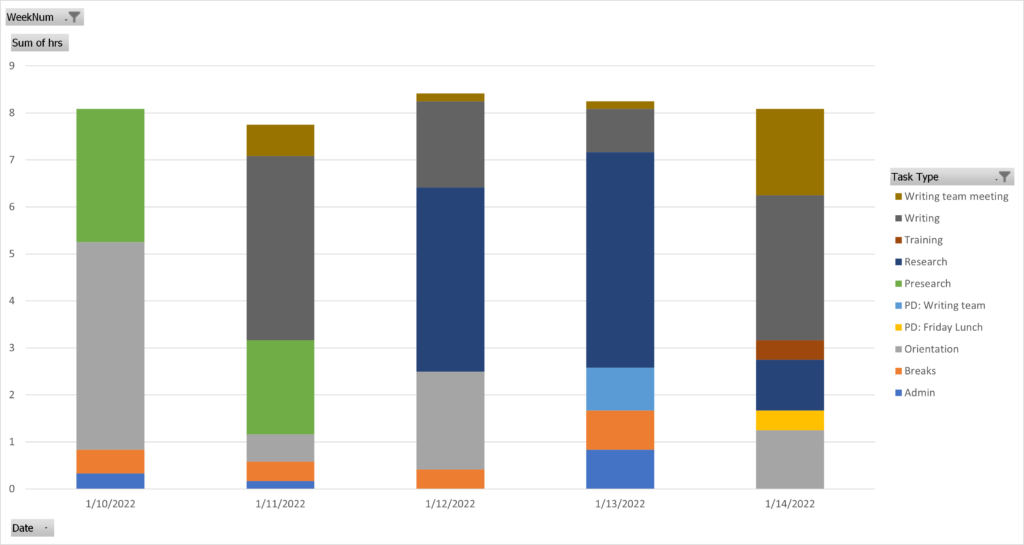

Orientation’s done, but I don’t have a lot of projects of my own yet. So, I’ll keep researching the thing I mentioned last week and trying to get up to speed on produces, services, and processes.
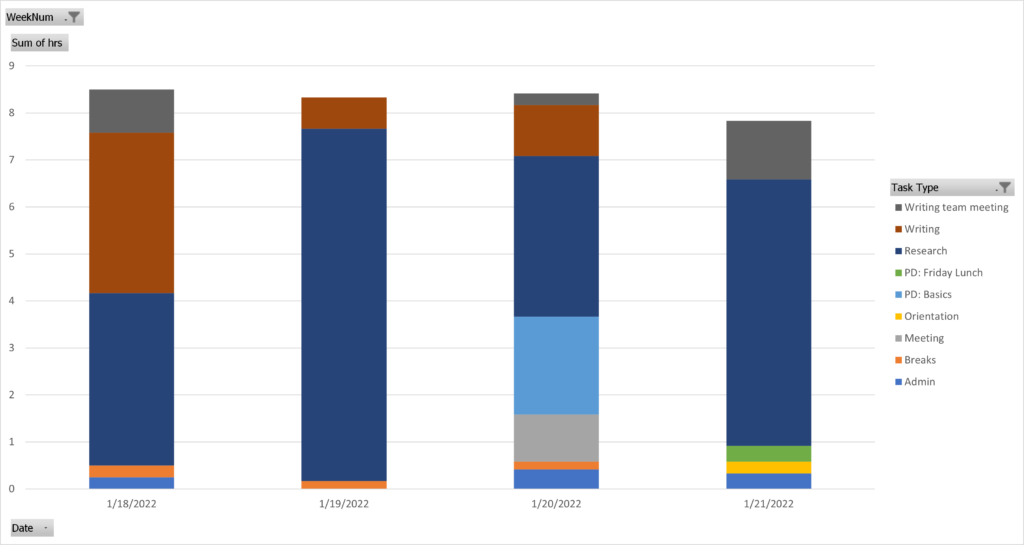
That’s a lot of research, right? Monday was Civil Rights Day, which we have as a holiday. I went down to help pack things up and drive a truck-full of boxes back with me. Both of my in-laws stayed down in Klamath Falls to help pack and take care of the kids, so I get to really focus on getting some work done.
That’s when things got weird.
Change of Pace
The research and writing I did this week was a lot like last week, so I won’t get into it here. Instead, I want to take a minute and verbalize something that’s been on my mind every commute this week.
(If you’re just tuning in, my commute is still about 90 minutes each way, mostly due to snow. In better weather, it’ll be 40-45 minutes until we get a place in the town where I work. Until then, crashing with the in-laws!)
When I taught, I would have killed for the time I currently have to devote to staying on top of my work. I cannot stress enough how weird this schedule feels. I mean, I get to work around 8:00am every day (if it looks like I’m going to get there early, I stop and grab coffee). I leave around 4:30pm because everyone else is leaving and there’s peer pressure to GTFO. The office is pretty empty when I get there at 8:00 (at least, the other Writers don’t usually roll in for another 20-30 minutes), and I get the feeling I don’t really need to be there so early.
I mean, that’s especially true now, since I don’t really have work to do.
But, there’s lots that I could be doing. I could be doing more webinars and online courses, reading technical papers, checking out textbooks from the library… I could be working like a grad student to really Get Good at this thing as quickly as possible.
I mean, I’m kind of doing that already. A lot of this week’s research went into webinars that are way beyond me (like, electrical and computer engineering that’s very specific to what this company does), but still, there’s an expectation that I just go home at the end of the day and not do any work at all. My supervisor told me not to take my laptop home this week — not because I shouldn’t be carrying company laptops around with me (lots of people do that), but because I will work at home, especially this week when it’s just me in the house.
I’m still not taking any reasonable kind of break, and I’m maybe stressing a little more than I should about getting a handle on all of the engineering stuff, but this is a far cry from what I’ve been used to over the last decade.
Lingo: “Just In Time”
It’s worth noting at some point (why not now?) that the founder of this company was a faculty member at the university in town. He invented the first product the company sold after he finished his PhD, then he started the company a few years later, and he still keeps pretty close ties with the school. A lot of the company’s structure and philosophy comes from best practices as described by academic research. That’s something that attracted me here — it’s not a company based on grift or making a quick buck off a new fad, it’s based around doing things the best way possible.
One of the major themes in our best practices conversation is World Class Manufacturing, a model for just-in-time manufacturing processes. “Just-in-time,” or JIT, is essentially doing only as much as you need to do when you need to do it, and nothing more. If you’re going to sell 100 widgets a month, you make 100 widgets. You don’t make 200 and anticipate sudden growth, and you certainly don’t just make widgets non-stop just to make sure you’re always making widgets. There needs to be time built in to every process for everyone to stop, reflect and talk about how well things are going and whether they could be better.
I was given a copy of the book by my supervisor. I read it. I have a lot of notes about how academia could do better, especially the required time to stop and reflect.
One thing we do (did?) in academia was put out fires. We put out lots of fires. In fact, everything we ever did was some version of putting out a fire.
- Grading? Well, it’s a stack of 25 research proposals turned in today that need to be back to everyone by the end of the week so they can start their big project.
- Institutional report? You’ll have your data from IR next week, a day or two before (or after) the report is due to the Dean, who needed it to send it to the Provost yesterday.
- Course prep? Class is in 20 minutes. Didn’t you get those proposals graded?
The door swings the other direction, too. Students have way too much on their plates, so they’re always working to get work done. There’s never any time to stop and really reflect on what they’re doing unless that’s the assignment (and, even then, the reflection is like any other assignment: something that needs to be finished in order to get to the Next Thing).
My Very Own Fire
Here, I’ve been really happy with how few fires seem to be going on. Even when people say that something is a big rush or on fire or “a JIT project,” they aren’t the same kinds of fires I’m used to. If anything, they look well-managed and well-planned. For instance, I was given a new “JIT” (fire) project this week — write some web page meta descriptions for a few dozen pages that didn’t have a description at all, plus a few that had descriptions that needed to be revised.
If you don’t want to click that link, a meta description is a special bit of text in a webpage’s <head> that tells search engines what the page content is. It’s the description you see when you use Google or Bing or DuckDuckGo.
Having a page without meta descriptions isn’t terrible, but it’s something that shouldn’t happen if you’re a major business with a huge website. So, this was very much a fire to put out, or at least that’s how I thought of it. I was actually given this project last Friday afternoon, and I tackled basically all of it on Monday this week. I wanted to make sure it was done ASAP because that’s the pace I was used to.
I probably should have taken a little longer on it. Not because my work was rushed or subpar, but because I just went back to what I was doing before: reading and webinars.
Turns out, life as a professional writer is a lot more prep and plan than actually writing!