Solicited Proposal Peer Review

We’ve made it to our first peer review! The solicited proposal should be completed by early next week if possible.

For this peer review (and as a discussion post), I’d like you to do two things:

By Wednesday, please post your draft in whatever form it’s currently in. This might be the outline from last week, it might be complete proposal, it might be somewhere in between.

By Friday, please respond to the two peers above you in this discussion board. (First two posters: please pick any two peers, but maybe start at the bottom of the list when you’re ready to review?) Your response should address the following:

  • How complete does this proposal look? Be honest. Hopefully you and your peer agree on its level of done-ness.
    • If it’s not complete, which specific parts seem to be missing? (Again, you aren’t saying anything bad about their proposal. Your peer needs to know if it’s clear which parts still need to be worked on.)
  • Can you clearly identify the train of thought from start to finish? That is, do you understand the argument your peer is making for why they need this support?
  • Do your peer’s comments accurately identify the moves they are making?
  • Does the placeholder text, if any, clearly convey what that part of the document is supposed to do?
  • Finally, if your peer included their RFP information or requirements (one of the requirements of the final version you turn in to me), does it look like they are doing what the RFP asked them to do?
    • If not, what’s missing?

Grading

The grading for this peer review is very simple.

  • If your draft is posted by Wednesday, 2 points.
  • If you provide any feedback at all to your peer, 1 point.
  • If your feedback addresses all of the points above and is useful, 2 points.
    • Please don’t just leave it at “Great job!” Even when your peer does an awesome job, tell them what was great!

RFP Resources

What this Document Is

This is a loose list of resources to find grant opportunities. It is worth noting that exhaustive lists of opportunities are hard to come by—and typically very expensive (grant agencies are careful about sharing their opportunities for the same reason you probably don’t put your personal phone number in public forums!). This list is compiled from my and student work in the past.

I will continue updating this resource as I encounter new and useful things.

List of Live Resources

National

Grants.gov Grants.gov is a standard starting point when looking for public funds for a project. It archives all live, upcoming and closed opportunities from every government agency that offers grant funding. Obviously, this means you will need to do some careful searching to find things that are applicable to your goals. Grants.gov is an index resource rather than a host for grant submissions, so all opportunities that you click on will follow a similar format. Each will give you information about the granting agency, grant limits, proposal qualifications and proposal submission. If you use this resource for class, you must do more research on the agency or organization behind the grant.

NIH Grants (https://grants.NIH.gov/funding) Like Grants.gov, the National Institutes of Health funding site is primarily an index. However, because grant types and organizations are more similar than on Grants.gov, you will find more detailed information on each grant opportunity. Do note that the NIH funds a wide variety of projects: you will find multimillion dollar support for researching AIDS and cancer treatment alongside $50,000 funds for small, local interventions. The structure of each resource is also little wonky. You will need to do quite a bit of scrolling down (or clicking through a series of links) before you find the full text of a grant.

NACCHO: The National Association of County and City Health Officials funds county- and city-level health administration efforts. This is separate from health intervention or outreach. NACCHO tends to be concerned with logistics and bureacratic efficiency. NACCHO grants do not require any kind of membership, but they are often very involved. If you look at a NACCHO grant for this class, let me know. Students typically identify a few faculty members or professional contacts (the Collaborators and Affiliates part of your Biosketch) that they would work with, then fill out specific parts of the NACCHO grant application.

NEA: The National Endowment for the Arts funds a variety of arts and culture projects. This includes fellowships for creative writing (if you’ve got a book you’re trying to finish) and community grants to make culture and history more accessible. In this set, the “Our Town” grant is one of the most accessible for a first-time grant writer, as it is designed to take advantage of existing partnerships you may have in a community and a creative/design ability you’ve been honing.

NEH: The National Endowment for the Humanities funds traditionally academic work. If you’ve got a journal article or book manuscript that you want to polish up, if you have some academic research you’d like to perform or if you’ve got anything that otherwise feels like a “school” project, only bigger, this is the right place to go.

State/Regional

Oregon Community Foundation The OCF supports a variety of public-facing projects in the state of Oregon. These range from business support to health and education, even to public parks development. Like the NIH site, this site can be a little overwhelming if you are just browsing. However, if you have even a loose idea for a thing you’d like to do for the public good in Oregon, this Foundation is an excellent option to look at. Professional Organizations One function of professional organizations is the funding and support of projects under their umbrella. I have worked on curriculum design and writing assessment projects funded by some of my own professional organizations—while the support is typically not very large (up to a few thousand dollars), it can help get a larger project off the ground.

Local

Klamath: Klamath County Economic Development Grant Program The KCEDGP is local to Klamath County and expects grantees to raise a significant amount of their own funds prior to applying. However, that said, if you are looking to start a project that benefits the local Klamath economy (including a small business), this resource is worth checking out. Even if you are not located in Klamath or if you aren’t looking for an economic development grant, this is a resource worth scrolling through to see the proposals of previous awardees.

Locally Judged and Awarded: Walmart Local Community Grants are typically small, but they can be used for a variety of local projects. In the past, students have written proposals for a Walmart grant with the intent of using it as either seed funding or proof-of-concept funding for a larger Oregon Community Foundation, NIH or other grant.

(Note: The Walmart Local Community Grant form and RFP are getting harder to access. This page will take you to a quick outline of what they expected in Spring 2020.)

Professional Society

  • ASCE (the American Society for Civil Engineers) offers several types of grants for members of student ASCE chapters, such as the STAY grant to boost or retain membership in student ASCE chapters and Conference Activity Grants to support student ASCE chapters who want to develop activities or events aroung regional conferences.
  • IEEE (the Institute of Electrical and Electronics Engineers) offers a variety of funding opportunities for student members, including scholarships and project funding. However, you must be an IEEE student member to see these opportunities (which is why I have no other links here). If you aren’t already a member, please don’t join just for this class.
  • RSNA (the Radiological Society of North America) has funding opportunities for both research and education. Depending on your student level, you might be interested in the research opportunities that support initial study development, or you might be interested in grants to improve radiological science education, particularly if you have some faculty to work with. RSNA does require one person on the grant application to be a dues-paying member.
  • SDMS (the Society of Diagnostic Medical Sonography) offers grants for continuing or improving educational practices, scholarships, research and even grants to help pay for certification exams. You must be a dues-paying member of SDMS to apply for many of these.
  • NCA (the National Communication Association), like many academic organizations, primarily funds research efforts and outreach associated with their discipline. If you are a student scholar looking for funding to do a large communication-oriented project (that will result in a presentation or publication), the NCA “Advancing the Discipline” grant may be appropriate for you.

Annotated Proposal

At the end of the term, I would like you to revise one of your two proposals from this term. This is not a request intended to reduce my end-of-term workload. Rather, I want you to really focus in on one of the proposals you’ve crafted and commit to it. Make it the best it can possibly be, ideally with the intent of submitting it at the conclusion of this course (or holding on to it as a template for future proposal work).

In this process, you should work through any comments you received from me or from peers and address them. You might do what your reviewer asked, you might take their advice and go a different direction or you might ignore it entirely. Whatever you decide to do, leave a comment on your proposal explaining your choice.

You should also clean up any placeholder content in your first draft. Either fill it in with the content you planned from the beginning or remove it. Leave a comment explaining what you did and why. (If you had to do some research to gather information, leave a reminder of where you found that info if your proposal does not require a reference list.)

Review your original comments to make sure they correctly point to and explain the moves you are making in this proposal. Revise the moves themselves or the comments if you need to. Again, leave a comment (or reply to your original comments) explaining what you did.

If you are revising your Solicited Proposal, please add a markup of all dispositions you are using in this document.

Finally, make any additional changes you feel are necessary to make this proposal especially strong for your audience. Comment on any changes and additions you’ve made.

Grading

Most of the grading throughout the term is based on completion: either you did the things the assignment was looking for or you didn’t. This final assignment is graded on completion and quality.

Front Matter: Please include your cover page (with your name, project title and a brief description of what you want supported) and the description page (audience description for a solicited proposal, table of dispositions for an unsolicited proposal). Including this material is worth 2 points.

Content: This must be a well-crafted proposal.

  • A clear purpose is worth 1 point.
  • Sufficient support to convince your audience is worth 3 points.
    • Inadequate support in some areas or way too much discussion in some areas will reduce this to 1 point.
  • A rhetorically effective (that is, a convincing) proposal is worth 2 points.

Annotations: You need to explain the moves you are making in this document.

  • Connor & Upton: Clearly and correctly identifying your Territory, Gap, Goals and Means is worth 1 point.
  • Aristotle: Clearly and correctly identifying each disposition you invoke is worth 1 point.
  • Goering: Clearly and correctly identifying what relationship you are invoking is worth 1 point.

Formatting and Correctness: This document needs to look professional.

  • Formatting that follows the RFP guidelines or that otherwise improves readability is worth 2 points.
    • Following standard academic guidelines but not the guidelines of your RFP or of the document type you are creating will reduce this to 1 point.
  • A document that contains no noticeable errors or stylistic mistakes is worth 2 points.

Revised Resume or Biosketch

Process

Please complete this document and submit it on the Revised Resume or Biosketch assignment on Canvas by Wednesday June 9.

Grading

This rubric is the same as with the first resume, but half as many points.

  • Basic Information (1.5 points possible)
    • 1.5 points: Document clearly notes who you are, your major/academic background and other technical or professional expertises (if any)
    • 0.5 point: Document clearly notes who you are
  • Identifying Details (1.5 points possible)
    • 1.5 points: Your document has clear details connecting you to specific expertises or types of projects.
    • 0.5 point: Your annotations have to explain your connection to specific expertises or types of projects.
  • Suggested Application (2 points possible)
    • 2 points: Your paragraph clearly indicates the types of projects you would be interested in.
    • 1 points: Your paragraph indicates vague areas you would be interested in working.

Annotated Unsolicited Proposal Draft

We’ve spent the last few weeks talking through rhetorical appeals and processes more deeply, with an eye towards convincing someone to act when they had no idea you were about to reach out to them. We’ll put those principles into practice by writing an unsolicited proposal to our target audience—something delivered or encountered with no prior warning, where our rhetorical task is to convince them to act when they weren’t planning to do so in the first place.

These proposals typically take the form of letters, though they could also be web pages (like crowdfunding pages), social media campaigns (typically a series of posts, rather than a single bit of outreach) or other kinds of outreach. Again, as with the solicited proposal, I don’t want to put a constraint on what you produce just to standardize what I’m grading. Instead, I’ll be grading your annotations explaining your rhetorical choices and the effectiveness of those choices overall. If there is some content that you are not able to provide right now, but you feel that you could provide by the end of the term, please craft placeholder content and leave a comment explaining why it will be effective.

By the end of the term, I will expect you to fill in all or nearly all of those placeholders, but you don’t need to exhaust yourself doing that right now.

Deliverable

In a Word or Open Office document, please compose the following. Use the Page Break tool to ensure each component starts at the top of the next page.

  • A cover page with your name, your project name and a brief description of what you’re asking for support for (2-4 sentences).
  • A separate page with your last discussion post (the table of dispositions) copied and pasted.
  • Your proposal draft, with annotations and placeholders.
    • Annotations should at the very least identify your Territory, Gap, Goal and Means
    • Annotations should also identify the places where you generate the dispositions from your table

Annotations

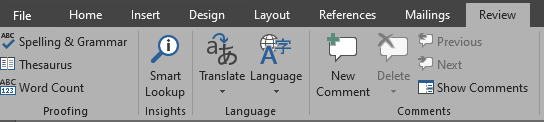
In Word, you can add comments by heading to the Review tab, then clicking New Comment.

Peer Review

By Wednesday May 26, please post your draft to the Unsolicited Proposal Discussion board as an attachment. By Friday May 28, please respond to two of your peers’ proposals. You should respond to the post directly above and directly below yours. (First and last posters: pick any peer for the above/below post. If you do not submit a document for review, you may pick any two peers to review.)

You will receive 2.5 points each (to a max of 5 points) for reviews that address the following:

  • Is the proposal’s project clear, in the proposal draft itself? If not, where could it be improved or what did it seem like the project was?
  • Does your peer use each rhetorical move appropriately and effectively? If not, which ones could be improved?

Proposal Grading

As noted on the syllabus, there is a due date but not late penalty on this. Please submit this document by Sunday May 30, or as soon as you are able to. A woefully incomplete proposal is better than nothing! Note that the rubric below is intentionally very forgiving. I’m hoping that you’ll do revisions over the next five weeks.

  • Territory, Gap, Goal, Means: 3 points possible
    • Identifying all four of the moves described by Connor and Upton is worth 3 points
  • Dispositions: 5 points possible
    • Identifying all of the dispositions from your table is worth 2 points.
    • Using the right evidence or discussion to create all of those dispositions is worth 2 points.
      • Clumsy or incorrect rhetoric is worth 1 point.
    • Ending with the right disposition for the action you want your audience to take is worth 1 point.
  • Formatting: 1 points possible
    • Formatting your document in such a way that it is easy to read and matches the type of document it is meant to be (e.g. letter, social media post, webpage) is worth 1 point.
  • Correctness: 1 points possible
    • Having no errors or stylistic mistakes the average reader would notice is worth 1 point

Discussion 6: Buddy System

During this week, please do the following.

  • Step 1: By Wednesday, reply to your post from last week. Using Elizabeth Goering’s framework, please identify what relationship you want to invoke with your audience. Explain why that is the most appropriate relationship in terms of the power you each have and the level of support you’re requesting.
  • Step 2: By Friday, edit your post from Wednesday. Add at least a paragraph of instruction to yourself explaining what language you need to use or avoid to create that relationship. Be specific here. Note specific words that you should use or avoid.

Process

Please note that I intentionally weight discussion boards towards simple participation, rather than making some number of discussion points. I want you to engage with each other, but I don’t want to force it. To that end, our course discussion board is going to be … weird.

Whenever you post, please write at the top of your post “Discussion X-Y,” where X is the discussion number and Y is the step number (1 or 2). That’s what I’ll use as a signal for which assignment you’re doing, if any (or if you’re just responding to a peer for funsies).

This is going to make a pretty giant mess when it comes to grading, so I’ll try to give feedback as quickly as possible, but getting the points in the book will be another matter entirely.

Grading

Discussion boards in this class are all worth 5 points. The first post is worth 2, and it is graded on whether or not it was completed on time. The second post is worth 3 points, split between the quality of your response and the timeliness of it.

Step 1: You’ll get 2 points if you post your initial identification and justification by Wednesday night. (Obligatory wiggle room statement: I’ll start checking Thursday morning, but your peers might be looking sooner.)

Step 2: You’ll get 2 points if you provide detailed, accurate instructions to yourself in your response, and if your response is up by Friday night. You get 1 point just for attempting this step.

Discussion 5: Core Appeals

During this week, please do the following.

  • Step 1: By Wednesday, reply to your post from last week or a peer’s post with an audience you want to write towards. In the body of your reply, please write a 2-3 sentence description of the project you want support for, then note the starting disposition your audience is likely to feel towards your project’s territory or gap (whichever you think they’ll think about first).
  • Step 2: By Friday, create a table with two columns in your Step 1 post. The left column should contain data points or discussion you could provide in your unsolicited proposal. The right column should indicate the disposition or emotion your audience will feel in response. Please put these items in the order you would provide them in your proposal. (That is, like this week’s videos discuss, you should work through a set of emotions/dispositions to get your audience from their starting point to whatever disposition is necessary for them to offer you support.)

Process

Please note that I intentionally weight discussion boards towards simple participation, rather than making some number of discussion points. I want you to engage with each other, but I don’t want to force it. To that end, our course discussion board is going to be … weird.

Whenever you post, please write at the top of your post “Discussion X-Y,” where X is the discussion number and Y is the step number (1 or 2). That’s what I’ll use as a signal for which assignment you’re doing, if any (or if you’re just responding to a peer for funsies).

This is going to make a pretty giant mess when it comes to grading, so I’ll try to give feedback as quickly as possible, but getting the points in the book will be another matter entirely.

Grading

Discussion boards in this class are all worth 5 points. The first post is worth 2, and it is graded on whether or not it was completed on time. The second post is worth 3 points, split between the quality of your response and the timeliness of it.

Step 1: You’ll get 2 points if you post your initial statement by Wednesday night. (Obligatory wiggle room statement: I’ll start checking Thursday morning, but your peers might be looking sooner.)

Step 2: You’ll get 2 points if you create a table of data/dispositions in your response, and if your response is up by Friday night. You get 1 point just for attempting this step.

Discussion 4: Audience Identification

During this week, please do the following.

  • Step 1: By Friday, please do one of three things. As with the solicited proposal, you will have lots of opportunities to abandon ship and find a new project/audience in the next few weeks.
    • Add a post to an existing thread. In addition to the usual “Discussion X-Y” header, please add “#UnsolicitedAudience.” (Yes, that’s a hashtag. I want to make this easy for folks to CTRL F through the various audiences for our next proposal.) In the body of your post, please identify a potential audience who would also be interested in project you pitched with your solicited proposal.
    • Create a new thread. Please use the hashtag listed above. In the body of your post, please identify a new project you want to get support for and a potential audience you could write to (or create mass-mailing/mass-contact materials for).
    • Create a new thread. Please use a different hashtag than the one listed above: #CrowdfundingAudience. Please identify a project you believe would benefit from a crowdfunding platform (e.g. Kickstarter, Experiment, IndieGoGo) rather than a traditional proposal.
  • Step 2: By Friday, please expand on your post from Wednesday the first part of your post by telling us what you know about your target audience. If you are doing the crowdfunding option, please describe your target audience. Yes, anyone can see and support a Kickstarter, but successful crowdfunding campaigns are directed at a narrow slice of the internet.
    • What do they value?
    • What projects have they supported in the past?
    • What is the limit on their ability to provide support? (i.e. How many dollars could you expect from them, or if you’re asking for other kinds of support, what’s the limit of that support?)
    • What do they already think about your project? Or, when they first see your proposal, what is their initial response likely to be?

[example]

Example

I want to get members of my community to donate school supplies to help restock elementary classrooms next Fall, particularly because COVID, distance learning, hybrid learning, distancing requirements, etc. all impacted teachers’ ability to rely on students to provide their own pencils, crayons, paper and other goods, and they had to provide all of that over the last year. It was actually really nice as a parent to not have to worry about that stuff, so I’d like to help the school provide those things to all kids.

I’m asking people in a specific neighborhood in Klamath Falls. K Falls folks tend to value community, as shown by the fact that they’re willing to risk an “Extreme Risk” COVID rating just to keep eating at local restaurants. I don’t know if that’s the best way to show community spirit, but it’s what we’ve got. Ultimately, though, K Falls is limited in the extent of support they can provide, and that usually manifests as an unwillingness to fund projects beyond how things “used to be.” The normal parent shopping list at the start of a school year tends to be $20-30 (school supplies only!), so I would expect that my average donor might provide $30 or a little more. My average donor in this neighborhood is likely to be a grandparent or someone else who doesn’t have kids going to the school, so I bet they’d support 1-1.5 kids’ worth of stuff.

I don’t know the right medium to send this out—whether I should use a letter, social media outreach, a billboard or something else. Most likely, the people with kids are not going to like my message. I think their starting disposition would be Shame at the idea that I’m saying we should all pitch in to support classrooms, rather than relying on individuals to make that choice on their own. But, I’m really interested in getting the people who would feel Pride/Shamelessness in K Falls schools and in helping out the kids.

There are 486 students. If $30 is the average price of school supplies for one kid, I would need to raise $14,580 in cash or school supply donations.

[/example]

Process

Please note that I intentionally weight discussion boards towards simple participation, rather than making some number of discussion points. I want you to engage with each other, but I don’t want to force it. To that end, our course discussion board is going to be … weird.

Whenever you post, please write at the top of your post “Discussion X-Y,” where X is the discussion number and Y is the step number (1 or 2). That’s what I’ll use as a signal for which assignment you’re doing, if any (or if you’re just responding to a peer for funsies).

This is going to make a pretty giant mess when it comes to grading, so I’ll try to give feedback as quickly as possible, but getting the points in the book will be another matter entirely.

Grading

Discussion boards in this class are all worth 5 points. The first post is worth 2, and it is graded on whether or not it was completed on time. The second post is worth 3 points, split between the quality of your response and the timeliness of it.

Step 1: You’ll get 2 points if you post your initial audience statement by Wednesday night. (Obligatory wiggle room statement: I’ll start checking Thursday morning, but your peers might be looking sooner.)

Step 2: You’ll get 2 points if you cover all four items (values, past support, ability to act, starting disposition) in your response, and if your response is up by Friday night. You get 1 point just for attempting this step.

Annotated Solicited Proposal Draft

We’re here! Sort of.

One of the hardest parts about this class is that everyone is doing a different assignment. Some RFPs will ask you for a 3-5 page document, while others might ask for 20 pages of research and a host of government forms. How can I keep expectations at least a little fair?

Well, we’ve been talking about the rhetorical moves in grant proposals, and we’re only halfway through the term. So, this assignment is going to ask you to write your solicited proposal, but leave some comments telling me about the moves you’re making and why they’re effective. Wherever you don’t have the time, information or expertise necessary to fill in part of the document, leave a placeholder paragraph explaining what needs to go there to make the document work, then add a comment explaining the rhetorical move behind that chunk of the document.

By the end of the term, I will expect you to fill in all or nearly all of those placeholders, but you don’t need to exhaust yourself doing that right now.

Deliverable

In a Word or Open Office document, please compose the following. Use the Page Break tool to ensure each component starts at the top of the next page.

  • A cover page with your name, your project name and a brief description of what you’re asking for support for (2-4 sentences).
  • A separate page with your last discussion post (the outline and moves) copied and pasted.
  • Your proposal draft, with annotations and placeholders.
    • At the very least, annotations must identify your Territory, Gap, Goals and Means.

Annotations

In Word, you can add comments by heading to the Review tab, then clicking New Comment.

Peer Review

By Wednesday April 28, please post your draft to the Solicited Proposal Discussion board as an attachment. By Friday April 30, please respond to two of your peers’ proposals. You should respond to the post directly above and directly below yours. (First and last posters: pick any peer for the above/below post. If you do not submit a document for review, you may pick any two peers to review.)

You will receive 2.5 points each (to a max of 5 points) for reviews that address the following:

  • Is the proposal’s project clear, in the proposal draft itself? If not, where could it be improved or what did it seem like the project was?
  • Does your peer use each rhetorical move appropriately and effectively? If not, which ones could be improved?

Proposal Grading

As noted on the syllabus, there is a due date but not late penalty on this. Please submit this document by Sunday May 2, or as soon as you are able to. A woefully incomplete proposal is better than nothing! Note that the rubric below is intentionally very forgiving. I’m hoping that you’ll do revisions over the next five weeks.

  • Territory: 2 points possible
    • Identifying your Territory statement is worth 1 point
    • Adequately describing the Territory of your proposal is worth 1 point
  • Gap: 2 points possible
    • Identifying the Gap your project addresses is worth 1 point
    • Situating your Gap within your territory is worth 1 point
  • Goal: 2 points possible
    • Identifying where your Goal statement happens is worth 1 point
    • Having a well-crafted Goal (or placeholder) is worth 1 point
  • Means: 3 points possible
    • Identifying where your Means statements happen is worth 1 point.
    • Clearly explaining (or using a placeholder to indicate what an explanation requires) is worth 2 points
  • Formatting: 0.5 points possible
    • Formatting your document in such a way that it is easy to read is worth 0.5 points.
  • Correctness: 0.5 points possible
    • Having no errors or stylistic mistakes the average reader would notice is worth 0.5 points

Discussion 3: Move Sketch

These discussion threads are going to get long!

  • Step 1: By Wednesday, please return to the thread you were responding to last week. (Use CTRL F for your name if you need to!) At this point in the week, I just want you to be mechanical: list out the required components and document sections for a proposal responding to your RFP. If your RFP is not specific about document structure (many government grants simply request a “Project Narrative”), use our course readings to suggest specific document sections or components you may need.
  • Step 2: By Friday, please edit your post from Wednesday. Add notes about where you will address the rhetorical moves that Connor and Upton described. For each of the seven moves below, please provide a short description of how you’ll address it in your proposal. (If you don’t have a description of that yet, this is a good time to state you’re still thinking about it.)
    • Territory
    • Gap
    • Goal
    • Means
    • Competence Claim
    • Importance Claim
    • Benefits

Hey, if you and at least one other peer are working in response to a single RFP, this is a good time to communicate with each other. I won’t stop you from collaborating on a proposal, particularly as some government grants can be extremely large projects (both in writing the proposal and following up on the grant project).

Process

Please note that I intentionally weight discussion boards towards simple participation, rather than making some number of discussion points. I want you to engage with each other, but I don’t want to force it. To that end, our course discussion board is going to be … weird.

Whenever you post, please write at the top of your post “Discussion X-Y,” where X is the discussion number and Y is the step number (1 or 2). That’s what I’ll use as a signal for which assignment you’re doing, if any (or if you’re just responding to a peer for funsies).

This is going to make a pretty giant mess when it comes to grading, so I’ll try to give feedback as quickly as possible, but getting the points in the book will be another matter entirely.

Grading

Discussion boards in this class are all worth 5 points. The first post is worth 2, and it is graded on whether or not it was completed on time. The second post is worth 3 points, split between the quality of your response and the timeliness of it.

Step 1: You’ll get 2 points if you post your initial outline by Wednesday night. (Obligatory wiggle room statement: I’ll start checking Thursday morning, but your peers might be looking sooner.)

Step 2: You’ll get 2 points if you cover all seven moves (territory, gap, goal, means, competence, importance, benefits) in your response, and if your response is up by Friday night. You get 1 point just for attempting this step.

css.php